Buying used is the smartest way to get more bike for your money: a two-year-old bike in good condition can cost a fraction of its original price and ride just as well. The risk is that you can't always see what you're buying. A frame crack, a worn-out drivetrain or a dubious history can turn a bargain into an expensive mistake.
The good news: a careful 15-minute inspection catches almost every problem. Take this checklist with you (literally, on your phone) and work through it before you commit.
Before you travel
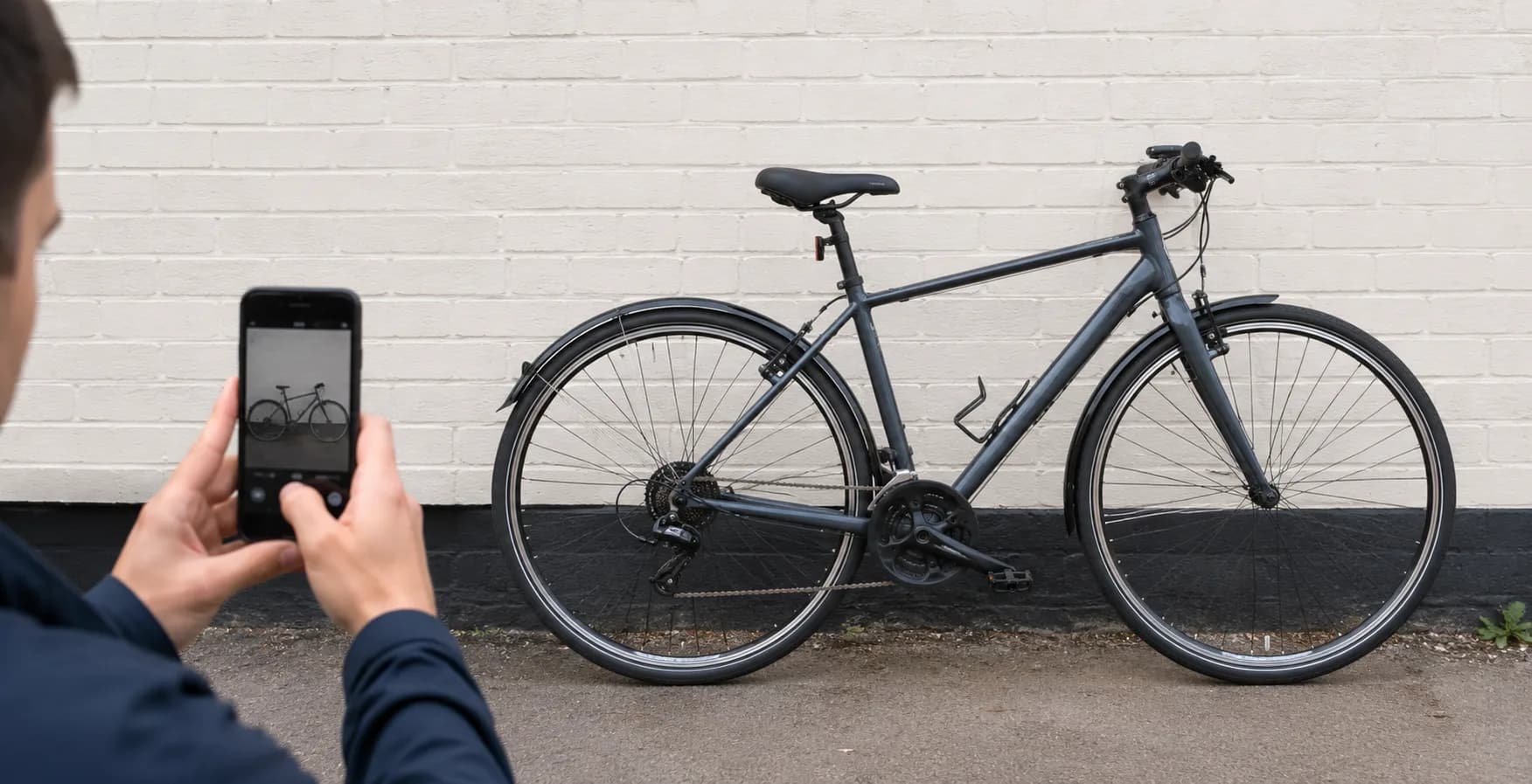
- Confirm the exact model, size and year, and ask for the serial number.
- Check the serial against a stolen-bike registry.
- Agree a fair price based on live comparable listings.
- Arrange to meet somewhere public where you can test ride.
The frame & fork
1. Check for cracks and damage
The frame is the one thing you can't cheaply replace, so start here. Run your eyes and fingers along the tubes, focusing on the high-stress areas: around the head tube, the bottom bracket, the seat tube junction and the chainstays. On carbon frames, look for cracks, crazing or soft spots; tap suspect areas and listen for a dull sound instead of a sharp tap. On aluminium and steel, look for dents, ripples or any sign of a repair or repaint hiding a problem.
2. Make sure the size is right
No deal is good if the bike doesn't fit. Confirm the frame size and, ideally, throw a leg over it. A bike that's the wrong size will never feel right no matter how good the price.
3. Inspect the fork and headset
Hold the front brake and rock the bike forwards and back: a knock usually means a loose or worn headset, which is cheap to fix but worth knowing. Lift the front wheel and turn the bars; steering should feel smooth, not notchy or stiff.
The drivetrain
4. Measure chain and cassette wear
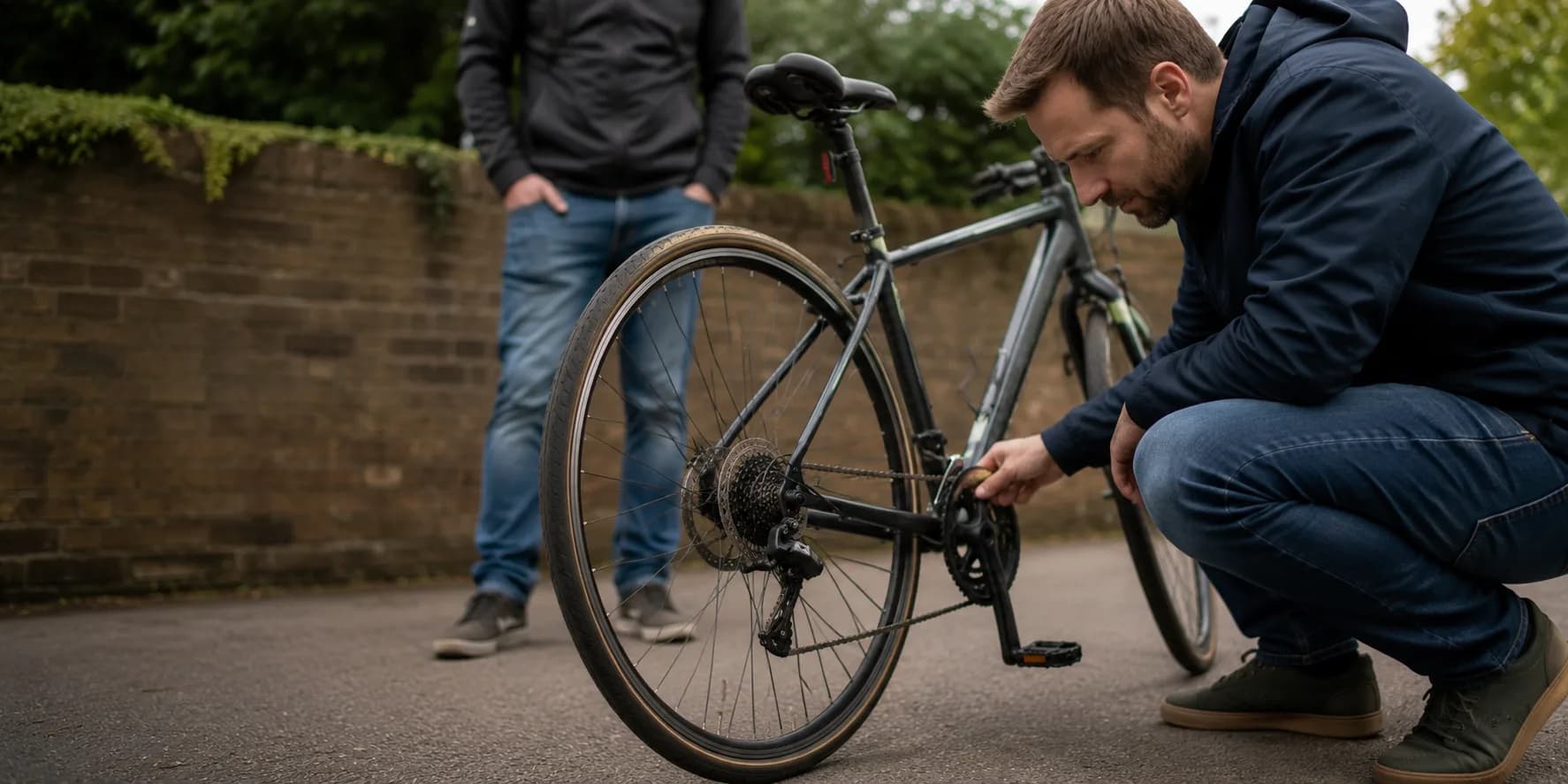
The drivetrain is the most common hidden cost. A worn chain that's been left too long drags the cassette and chainrings with it, turning a £25 part into a £200 job. If the seller has a chain checker, ask them to use it. Otherwise, look at the cassette teeth: if they're hooked or shark-finned rather than symmetrical, the drivetrain is near the end of its life.
5. Shift through the gears
On the test ride, run through every gear. Shifts should be crisp in both directions. Hesitation or chain noise can be a simple cable adjustment, or it can be a worn or bent derailleur; factor it into your offer either way.
Wheels & tyres
6. Spin the wheels and check for true
Lift each wheel and give it a spin. Watch the gap at the brake pad or frame: a wobble means the wheel is out of true. A small wobble is a quick fix; a big one, or a visible flat spot, can mean a damaged rim.
7. Squeeze the spokes and check the rims
Run a hand around the spokes: they should feel evenly tensioned, with none loose or broken. On rim-brake wheels, check the braking surface isn't worn concave. On disc bikes, check the rotors aren't badly scored or warped.
8. Look at tyre wear
Tyres are consumable, but cracked sidewalls or worn-flat centres mean an immediate spend. Not a dealbreaker, just another bargaining chip.
Brakes & contact points
9. Test the brakes
Pull both levers hard. They should feel firm and stop the bike confidently on the test ride, not pull to the bar. On hydraulic discs, a spongy lever can mean the system needs bleeding. Check disc pads and rim blocks for remaining life.
10. Check the contact points
Bars, grips or tape, saddle and pedals are cheap individually but add up. Make sure nothing's cracked, and check the seatpost isn't seized into the frame: a stuck post on an old bike can be a real headache.
Browse verified listings on Shift
Every listing can show a serial number and proof of purchase, so you know what you're buying before you message.
History & paperwork
11. Check the serial number against a registry
This is the step too many buyers skip. Every bike has a serial number, usually stamped under the bottom bracket. Ask for it before you travel and run it through a stolen-bike database like BikeRegister. If the seller won't share it, walk away; there's no good reason to refuse.
12. Ask for proof of purchase and history
A receipt, original listing, or service records all point to a genuine seller and a well-kept bike. Ask why they're selling, how long they've owned it, and whether it's ever been crashed or repaired. Honest answers build confidence; evasive ones tell you plenty.
Putting it together
You don't need to be a mechanic to buy well; you need to be methodical. Most issues you'll find are normal wear that simply belongs in the price negotiation: a tired chain, brake pads near the end, tyres due for replacement. The serious ones (a cracked frame, a seized post, a serial that won't check out) are exactly what this list is designed to surface before your money's gone.
Work through all twelve points, trust the bike and trust the seller, and you'll come away with a great bike for a fraction of new. Rush it, and you're gambling. The checklist takes fifteen minutes. The mistake can cost hundreds. When you are ready to look, browse second hand mountain bikes and second hand road bikes for sale on Shift.